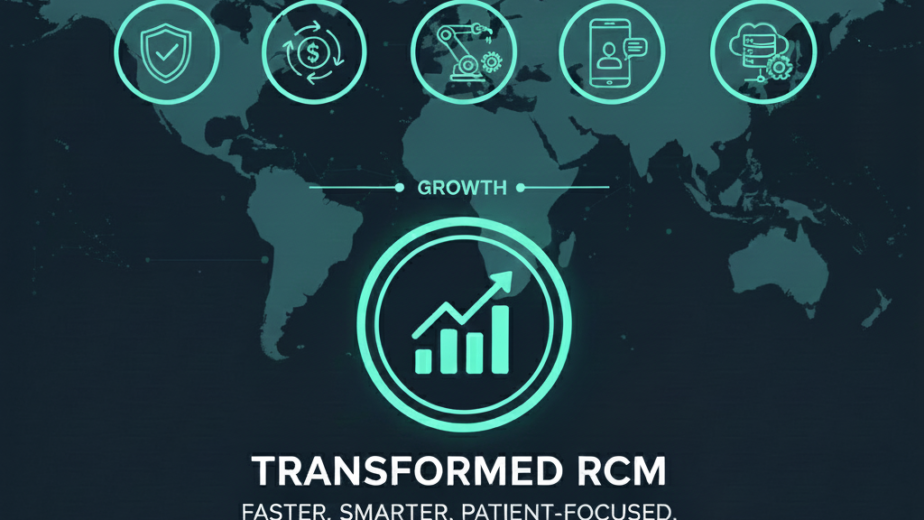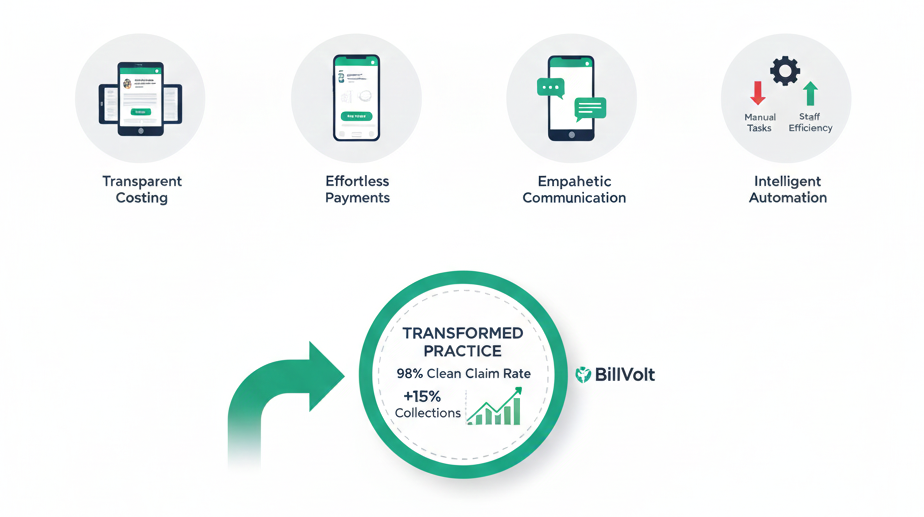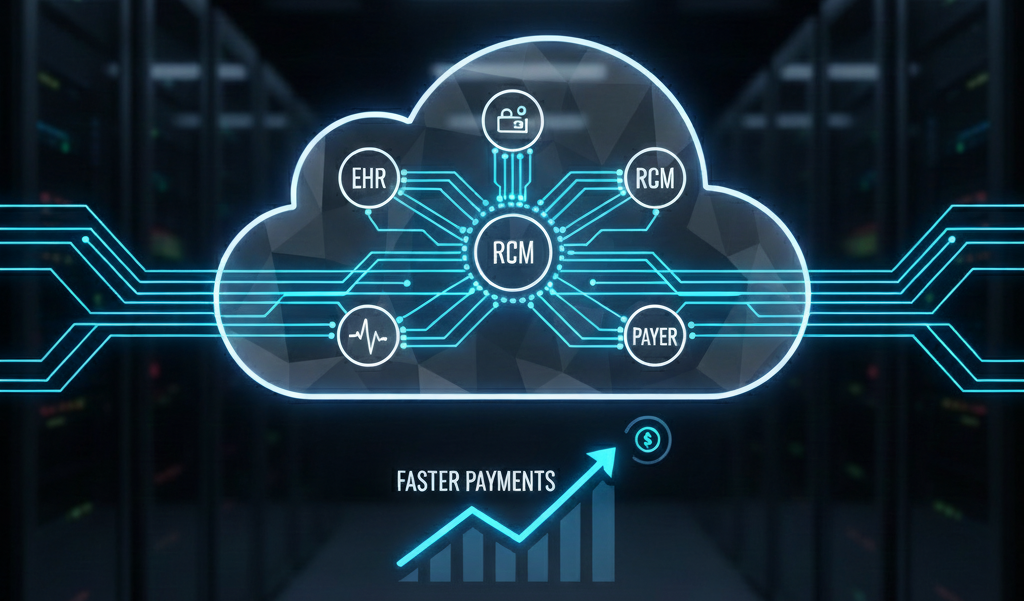
In today’s healthcare landscape, revenue cycle management (RCM) is no longer just about billing and collections, it’s about connectivity, automation, and real time data access. As healthcare organizations face growing administrative complexity, rising costs, and tighter reimbursement timelines, interoperability and cloud-based RCM solutions have become essential for financial sustainability.
A connected RCM ecosystem, powered by EHR integration, secure data exchange, and cloud RCM platforms, allows providers to streamline workflows, reduce errors, improve compliance, and get paid faster.
👉 Looking to modernize your revenue cycle?
Explore how BillVolt helps providers build connected, scalable RCM systems at www.billvolt.com.
What Is Interoperability in Healthcare RCM?
Healthcare interoperability refers to the ability of different systems, such as EHRs, practice management systems, clearinghouses, and payer platforms, to seamlessly exchange, interpret, and use data.
In the context of RCM, interoperability ensures that patient, clinical, and financial data flows smoothly across every stage of the revenue cycle, including:
- Patient registration and eligibility verification
- Charge capture and coding
- Claims submission and tracking
- Payment posting and reconciliation
- Denials management and reporting
Without interoperability, data silos form leading to manual work, delayed claims, billing errors, and lost revenue.
👉 If your team is still juggling multiple disconnected systems, it may be time for a smarter RCM approach. Learn how BillVolt simplifies interoperability at www.billvolt.com.
The Role of EHR Integration in Revenue Cycle Management
EHR integration is the foundation of a connected RCM ecosystem. When your EHR system is fully integrated with your RCM platform, clinical and financial data stay aligned from the moment a patient is scheduled to final payment.
How EHR Integration Improves RCM Performance
- Real time eligibility verification using patient demographics
- Accurate charge capture based on clinical documentation
- Cleaner claims through automated coding validation
- Reduced documentation gaps that lead to denials
- Faster claim submission with fewer manual steps
For providers, EHR integration means less rework, fewer errors, and a faster path to reimbursement.
Want your EHR and billing systems to actually work together?
Discover EHR-integrated RCM solutions with BillVolt.
Secure Data Exchange: Protecting Patient and Financial Information
With increased connectivity comes increased responsibility. Secure healthcare data exchange is critical for protecting sensitive patient information and maintaining regulatory compliance.
Modern RCM ecosystems rely on HIPAA compliant data exchange protocols, encryption, and role-based access controls to ensure that data remains secure while moving across platforms.
Best Practices for Secure RCM Data Exchange
- End-to-end encryption for data in transit and at rest
- Secure APIs for system integrations
- Role-based access and audit logs
- Compliance with HIPAA, HITECH, and CMS guidelines
Secure interoperability doesn’t just protect data, it strengthens payer relationships and reduces compliance risk.
Cloud RCM Platforms: The Backbone of a Connected Ecosystem
Cloud based RCM platforms are rapidly replacing legacy, on premise systems and for good reason. Cloud solutions offer flexibility, scalability, and real-time access that traditional systems simply can’t match.
Why Cloud RCM Solutions Are Transforming Healthcare
- Centralized access to billing and financial data
- Real-time reporting and analytics
- Automatic updates for payer rules and compliance changes
- Lower IT and infrastructure costs
- Scalable solutions for growing practices
Cloud platforms also enable seamless integration with EHRs, clearinghouses, and payer portals, creating a truly connected RCM ecosystem.
👉 Still relying on outdated billing software?
Upgrade to a cloud based RCM solution with BillVolt and gain real-time visibility into your revenue cycle.
Why Contracting is so Critical for Providers Across All Specialties
Many healthcare practices sign contracts without fully reviewing them, eager to get in network and start seeing patients. Unfortunately, this can lead to:
• Below market reimbursement rates
• Unfavorable payment terms
• Limited or no renegotiation options
• Long-term revenue loss
A well-negotiated contract can significantly impact your bottom line over the life of the agreement.
Building a Fully Connected RCM Ecosystem
A connected RCM ecosystem brings together interoperability, cloud infrastructure, and automation into one cohesive workflow.
Core Components of a Connected RCM Ecosystem
- Integrated EHR and practice management systems
- Cloud-based billing and claims management tools
- Automated eligibility and authorization workflows
- Secure payer connectivity
- Advanced analytics and performance dashboards
When these components work together, providers gain end-to-end revenue visibility and can address issues before they impact cash flow.
How Interoperability and Cloud RCM Reduce Denials
Claim denials remain one of the biggest revenue leaks for healthcare providers. Interoperable, cloud-based RCM systems significantly reduce denial rates by:
- Validating insurance data upfront
- Ensuring coding accuracy in real time
- Flagging missing or inconsistent information
- Adapting quickly to payer-specific rule changes
The result is cleaner claims, faster payments, and fewer costly appeals.
The Future of RCM: Smarter, Faster, More Connected
As healthcare continues to evolve, interoperability and cloud RCM solutions will become the standard; not the exception. AI-driven analytics, predictive denial management, and automation will further enhance connected RCM ecosystems.
Providers who invest in modern RCM infrastructure today will be better positioned to:
- Stay compliant with changing regulations
- Improve cash flow and financial performance
- Scale operations efficiently
- Deliver a better patient financial experience
👉 The future of RCM is connected, and it starts now.
How BillVolt Supports a Connected RCM Ecosystem
At BillVolt, we help healthcare providers simplify and strengthen their revenue cycle through technology-driven, cloud-based RCM solutions. Our approach combines EHR integration, secure data exchange, and performance-driven workflows to help providers get paid faster and operate more efficiently.
Whether your goal is to modernize billing, reduce denials, or gain full visibility into your revenue cycle, BillVolt is here to help.
Ready to reduce denials and speed up reimbursements?
Talk to BillVolt about smarter denial prevention strategies.