
Happy New Year and welcome to 2026! 🎉
As healthcare organizations step into a new year filled with evolving regulations, payer policies, and technological advancements, protecting revenue has never been more critical.
How Healthcare Providers Can Stay Ahead of Claim Denials and Protect Revenue
As healthcare reimbursement becomes more complex, claim denials remain one of the biggest threats to provider revenue. Heading into 2026, denial management is no longer just about fixing rejected claims; it’s about preventing denials before they ever happen.
Insurance payers are increasingly using automation, AI-driven edits, and tighter medical necessity guidelines. At the same time, providers are facing staffing shortages, rising operating costs, and growing compliance pressure. The result? Even small billing errors can lead to significant revenue loss.
In this blog, we will break down what denial management looks like in 2026, the most common denial risks, and proven denial prevention strategies that help practices improve cash flow, reduce AR days, and get paid correctly the first time.
What is Denial Management in Medical Billing?
Denial management is the structured process of:
- Identifying denied or rejected claims
- Analyzing the root cause
- Correcting errors and submitting appeals
- Implementing changes to prevent future denials
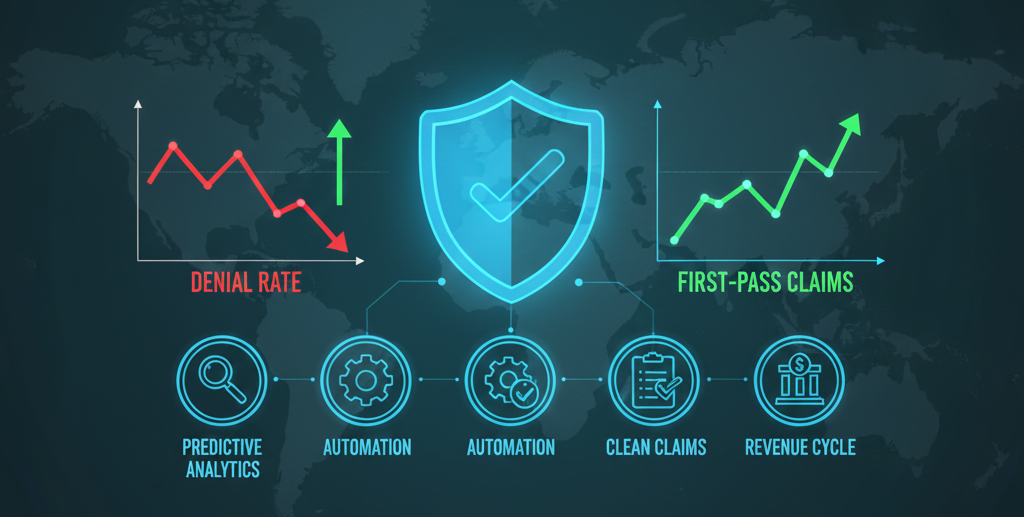
In 2026, effective denial management goes beyond rework. High-performing organizations focus on denial prevention, using automation, analytics, and payer intelligence to stop errors at the front end of the revenue cycle.
Is Your Revenue Slipping Through the Cracks?
Identifying denials is the first step, but stopping them before they happen is the ultimate goal. Don’t let common eligibility or coding errors drain your practice’s resources in 2026.
Why Claim Denials Will Continue to Rise in 2026
Despite technological advances, denial rates are expected to remain high due to several industry-wide factors:
- Payer Automation and AI-Based Claim Reviews
Insurance companies are increasingly relying on:
- Automated claim edits
- AI-powered medical necessity reviews
- Predictive denial algorithms
While these speeds up payer processing, it also means less tolerance for errors.
- Stricter Documentation Requirements
In 2026, payers expect documentation to clearly support:
- Medical necessity
- Level of service selection
- Time-based and MDM elements
- CPT and ICD-10 alignment
Incomplete or generic notes; even for valid services; can easily result in denials.
- Increased Prior Authorization and Policy Changes
Many services now require:
- More detailed prior authorizations
- Policy-specific documentation
- Frequent re-verification of benefits
Missed or expired authorizations remain a top denial driver.
- Coding and Modifier Complexity
Evolving CPT rules, NCCI edits, and payer-specific modifier requirements make accurate coding more challenging than ever.
Most Common Claim Denial Types in 2026
Understanding denial trends helps practices focus their prevention efforts. The most frequent denial categories include:
- Eligibility and coverage denials
- Authorization and referral denials
- Medical necessity denials
- Bundled or mutually exclusive procedure denials
- Missing or invalid modifiers
- Timely filing denials
- Duplicate claim denials
Tracking these categories monthly is essential for improving first-pass claim acceptance rates.
Denial Prevention Strategies for 2026 (Best Practices)
- Strengthen Front-End Revenue Cycle Processes
The majority of denials start before the patient encounter.
Key prevention steps include:
- Real-time insurance eligibility verification
- Accurate patient demographics capture
- Benefit and coverage confirmation
- Prior authorization tracking and validation
A strong front-end process can prevent up to half of all avoidable denials.
- Focus on Provider Education and Documentation Quality
In 2026, providers must understand how documentation impacts reimbursement.
Best practices include:
- Regular provider education on payer documentation rules
- Clear documentation of medical decision-making
- Avoiding cloned or auto-populated notes
- Ensuring time and complexity are well supported
Better documentation directly translates into fewer medical necessity denials.
- Improve Coding Accuracy and Modifier Usage
Accurate coding remains a cornerstone of denial prevention.
Effective strategies:
- Apply payer-specific coding guidelines
- Validate NCCI edits before claim submission
- Ensure correct modifier usage (e.g., -25, -59, -95, -93)
- Audit high-risk CPT codes regularly
Coding errors are one of the easiest; and most expensive; denial causes to fix.
- Use Automation and Predictive Denial Analytics
In 2026, modern denial management depends heavily on automation and data intelligence.
Automation helps with:
- Pre-submission claim scrubbing
- Real-time error detection
- Predictive denial risk scoring
- Automated worklists for billing teams
Practices using automated RCM solutions consistently see lower denial rates and faster reimbursements.
- Build a Structured and Timely Appeal Process
Not every denial should be appealed; but the right ones should be handled quickly and correctly.
Successful appeal workflows include:
- Clear appeal timelines by payer
- Standardized appeal templates
- Required documentation checklists
- Tracking appeal success rates
Timely, well-supported appeals significantly improve revenue recovery.
- Monitor KPIs and Denial Trends Consistently
Data-driven practices outperform reactive ones.
Key denial management KPIs to track in 2026:
- Overall denial rate
- First-pass acceptance rate
- Top denial reasons by payer
- Average days in AR
- Appeal win rate
Regular reporting allows practices to adjust workflows before revenue is impacted.
Denial Management vs. Denial Prevention in 2026
Denial Management | Denial Prevention |
Reactive | Proactive |
Manual corrections | Automated validation |
Higher operational cost | Lower long-term cost |
Revenue recovery | Revenue protection |
In 2026, denial prevention delivers the highest ROI.
How BillVolt Helps Practices Reduce Claim Denials
At BillVolt, we take a prevention-first approach to denial management by combining:
- Intelligent automation
- Payer-specific rule validation
- Expert billing and coding oversight
- Real-time denial analytics
Our mission is simple: help practices reduce denials, shorten AR cycles, and maximize reimbursements in an increasingly complex healthcare landscape.
Final Thoughts: Winning the Denial Battle in 2026
Denial management in 2026 is about strategy, technology, and consistency. Practices that invest in proactive denial prevention, automation, and education will be far better positioned to protect revenue and scale efficiently.
By focusing on clean claims, strong documentation, accurate coding, and real-time analytics, healthcare organizations can significantly reduce denials and stay ahead of payer challenges.
Ready to Reduce Denials in 2026?
Contact us to learn how our modern denial management and RCM solutions help providers get paid faster; and with fewer headaches.