The Ultimate Guide to Orthopedic CPT Codes for Medical Billers and Orthopedic Practices
Orthopedic medicine is one of the most procedure-intensive specialties in healthcare. From fracture repairs and ligament reconstruction to joint replacements and spinal surgeries, orthopedic providers perform a wide range of treatments every day.
Behind every orthopedic procedure is a critical administrative process: medical coding and billing.
For orthopedic clinics, ambulatory surgery centers, and hospital systems, understanding orthopedic CPT codes is essential for proper reimbursement, regulatory compliance, and efficient revenue cycle management.
At BillVolt, our billing specialists work closely with orthopedic practices to ensure claims are coded correctly and submitted efficiently. Because orthopedic billing involves complex surgical procedures and frequent coding updates, many providers rely on expert billing partners to minimize denials and maximize reimbursement.
This Complete Orthopedic CPT Codes Cheat Sheet for 2026 provides a detailed breakdown of:
- Common orthopedic CPT codes
- CPT codes for orthopedic procedures
- Orthopedic surgery CPT codes
- CPT code for orthopedic consult visits
- Billing best practices for orthopedic coding
Whether you are a medical biller, coder, practice manager, or orthopedic surgeon, this guide will help you better understand the most commonly used cpt orthopedic codes in modern healthcare.
What are Orthopedic CPT Codes?
Orthopedic CPT codes are standardized procedure codes used by healthcare providers to report orthopedic services for insurance billing and reimbursement.
These codes are part of the Current Procedural Terminology (CPT) system created and maintained by the American Medical Association.
Healthcare providers use CPT codes when submitting claims to insurers such as:
- Centers for Medicare & Medicaid Services
- Private health insurance companies
- Workers’ compensation programs
The CPT system ensures consistency in how medical procedures are reported and reimbursed across the healthcare industry.
In orthopedic care, CPT codes are used to describe services such as:
- Joint replacements
- Arthroscopic procedures
- Fracture treatment
- Tendon and ligament repair
- Spine surgery
- Joint injections
- Orthopedic consultations
Because orthopedic surgery covers many anatomical regions; including the shoulder, spine, hip, knee, and foot; there are hundreds of cpt codes for orthopedic procedures used by providers.
Why Accurate Orthopedic CPT Coding Matters
Orthopedic procedures are among the highest-reimbursed services in healthcare, which means accurate coding directly affects a practice’s financial performance.
Even small coding errors can result in:
- Claim denials
- Delayed payments
- Underpayment for surgical procedures
- Compliance risks during audits
At BillVolt, we frequently help orthopedic practices recover revenue lost due to coding mistakes or incomplete documentation.
Using the correct orthopedic surgery CPT codes ensures that healthcare providers receive full reimbursement for their services while remaining compliant with payer policies.
CPT Code for Orthopedic Consult
Before many orthopedic procedures are performed, patients first meet with an orthopedic specialist for diagnosis and treatment planning.
The CPT code for orthopedic consult usually falls under evaluation and management (E/M) codes.
Common Orthopedic Consultation Codes
Stop Losing Revenue to Coding Errors
Orthopedic claims are high-stakes. A single misplaced modifier on a total joint replacement can cost your practice thousands. At BillVolt, we specialize in capturing every dollar you’re owed.
Common Orthopedic CPT Codes
Below are some of the most frequently used orthopedic CPT codes in orthopedic practices across the United States.
CPT Codes for Orthopedic Procedures by Body Region
Orthopedic coding is typically categorized based on the anatomical region involved in the procedure.
Understanding these categories helps coders navigate the extensive list of orthopedic surgery CPT codes more efficiently.
Shoulder Orthopedic CPT Codes
Shoulder injuries are common in sports medicine and trauma cases.
Common cpt codes for orthopedic surgery involving the shoulder include:
Elbow and Forearm CPT Orthopedic Codes
Orthopedic procedures involving the elbow and forearm often treat trauma injuries, tendon tears, or repetitive strain conditions.
Hip Orthopedic Surgery CPT Codes
Hip conditions such as osteoarthritis and fractures often require surgical intervention.
Common orthopedic surgery CPT codes for hip procedures include:
Knee Orthopedic CPT Codes
Knee injuries are extremely common, especially among athletes and active individuals.
Spine Surgery CPT Codes
Spine procedures are some of the most complex surgeries in orthopedic medicine.
Common cpt codes for orthopedic procedures involving the spine include:
Fracture Treatment CPT Codes
Fracture treatment is one of the most frequent services provided by orthopedic specialists.
Common fracture-related cpt codes for orthopedic procedures include:
Orthopedic Coding Challenges
Orthopedic billing can be complicated due to the nature of surgical procedures and payer guidelines.
Some of the most common challenges include:
Multiple Procedures in One Surgery
Orthopedic surgeons often perform several procedures during a single operation, requiring careful coding and correct modifier usage.
Bundled Services
Some procedures are bundled together under payer policies, meaning they cannot be billed separately.
Global Surgical Periods
Many orthopedic surgeries include post-operative visits within a global surgical package.
Modifier Requirements
Orthopedic claims frequently require modifiers to clarify the services provided.
These challenges are why many practices rely on specialized billing companies like BillVolt to manage orthopedic billing workflows.
Best Practices for Orthopedic CPT Coding
To minimize claim denials and maximize reimbursements, coders should follow several best practices.
Stay Updated With CPT Changes
The American Medical Association releases annual updates to CPT codes. Using outdated orthopedic CPT codes can lead to denied claims.
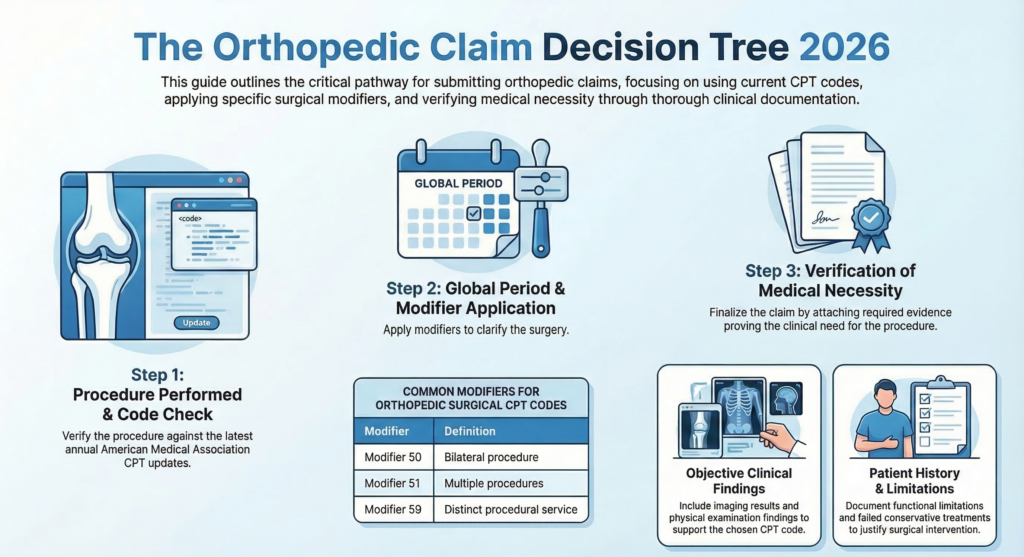
Use Correct Modifiers
Common modifiers used in orthopedic coding include:
- Modifier 50 – Bilateral procedure
- Modifier 51 – Multiple procedures
- Modifier 59 – Distinct procedural service
- Modifier 76 – Repeat procedure
These modifiers help clarify the use of cpt codes for orthopedic surgery.
Ensure Proper Documentation
Insurance providers require documentation proving medical necessity for orthopedic procedures.
Examples include:
- Imaging results
- Physical examination findings
- Functional limitations
- Failed conservative treatments
Proper documentation supports the use of orthopedic surgery CPT codes during claim submission.
How BillVolt Supports Orthopedic Practices
Managing orthopedic billing internally can be time-consuming and complex.
That’s why many practices partner with BillVolt for revenue cycle management.
BillVolt helps orthopedic providers:
✔ Reduce claim denials
✔ Improve coding accuracy
✔ Optimize reimbursement rates
✔ Handle CPT updates and compliance
✔ Streamline billing workflows
Our billing specialists understand the nuances of orthopedic CPT codes, allowing practices to focus on patient care instead of administrative burdens.
Future Trends in Orthopedic Billing
As healthcare continues to evolve, orthopedic billing is also changing.
Several trends are shaping the future of orthopedic coding and billing:
AI-Powered Medical Coding
Artificial intelligence tools are increasingly assisting coders with documentation analysis and CPT code selection.
Value-Based Care
Healthcare reimbursement is gradually shifting from fee-for-service models to value-based care systems.
Automation in Revenue Cycle Management
Automation tools help reduce administrative workload and improve claim processing efficiency.
Despite these advancements, accurate use of cpt orthopedic codes will remain essential for proper reimbursement.
Final Thoughts
Orthopedic medicine involves a wide range of complex procedures, making accurate coding essential for proper reimbursement.
Understanding orthopedic CPT codes, cpt codes for orthopedic procedures, and common orthopedic surgery CPT codes allows medical billers and orthopedic practices to streamline their billing processes and improve revenue cycle performance.
If your practice struggles with coding accuracy, claim denials, or administrative workload, partnering with an experienced billing provider like BillVolt can significantly improve financial outcomes while allowing providers to focus on patient care.
Ready to Streamline Your Orthopedic Billing?
Whether you have questions about specific CPT modifiers or want to outsource your entire revenue cycle, BillVolt is here to help.
Frequently asked questions (FAQs)
Frequently Asked Questions About Orthopedic CPT Codes
What are orthopedic CPT codes?
Orthopedic CPT codes are standardized medical procedure codes used to report orthopedic treatments such as joint replacements, fracture repairs, arthroscopy, and spine surgery. These codes are part of the Current Procedural Terminology system maintained by the American Medical Association and are used by providers when billing insurers like Centers for Medicare & Medicaid Services.
What are the most common orthopedic CPT codes?
Some of the most common orthopedic CPT codes include:
- 20610 – Joint injection (arthrocentesis)
- 27447 – Total knee replacement
- 27130 – Total hip replacement
- 29881 – Knee arthroscopy with meniscectomy
- 23472 – Total shoulder arthroplasty
These are frequently used common orthopedic surgery CPT codes in orthopedic clinics and surgical centers.
What is the CPT code for orthopedic consult?
The CPT code for orthopedic consult typically falls under evaluation and management (E/M) codes such as:
- 99202–99205 for new patient consultations
- 99212–99215 for established patient visits
The correct code depends on the complexity of the medical decision-making and documentation.
How are CPT codes for orthopedic procedures determined?
CPT codes for orthopedic procedures are determined based on several factors, including:
- The specific surgical procedure performed
- The anatomical location (shoulder, knee, spine, etc.)
- The surgical approach used
- Complexity of the operation
Accurate operative documentation is essential to assign the correct orthopedic surgery CPT codes.
Why are orthopedic surgery CPT codes important for billing?
Orthopedic surgery CPT codes determine how insurance providers reimburse healthcare services. Incorrect coding can lead to claim denials, delayed payments, or underpayment for procedures.
What modifiers are commonly used with orthopedic CPT codes?
Orthopedic billing often requires modifiers such as:
- Modifier 50 – Bilateral procedure
- Modifier 51 – Multiple procedures
- Modifier 59 – Distinct procedural service
- Modifier 76 – Repeat procedure
Modifiers help clarify the context of cpt codes for orthopedic surgery during claim submission.
How often are orthopedic CPT codes updated?
CPT codes are updated annually by the American Medical Association. Healthcare providers and billing companies must stay updated to ensure compliance with payer requirements.
What documentation is required for orthopedic CPT coding?
Proper documentation for cpt orthopedic codes typically includes:
- Patient medical history
- Physical examination findings
- Imaging results (X-ray, MRI, CT scan)
- Surgical notes and operative reports
- Medical necessity documentation
This information supports the accuracy of the coded procedure.
What are global surgical periods in orthopedic billing?
Many orthopedic procedures include a global surgical period, which means follow-up care and certain post-operative services are included in the original surgical payment. Separate billing during the global period may not be allowed unless specific conditions are met.
Why do orthopedic practices outsource CPT coding and billing?
Orthopedic billing is complex due to high-value procedures, strict payer guidelines, and frequent coding updates. Many practices outsource their billing to experienced revenue cycle management companies like BillVolt to reduce claim denials, improve reimbursement rates, and ensure accurate use of orthopedic CPT codes.